HDVO: Hybrid Dense Direct Visual Odometry
Abstract
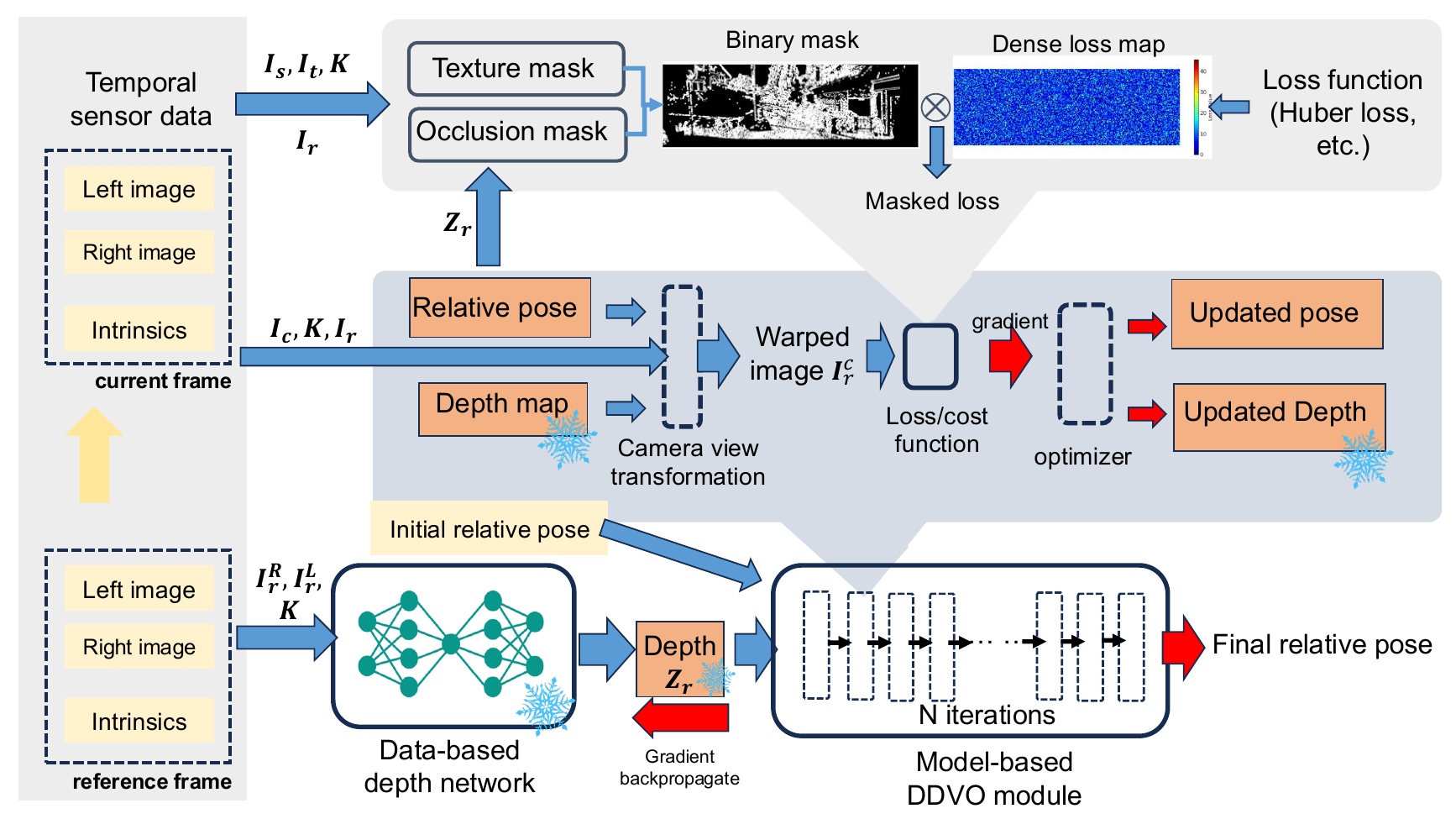
Dense direct visual odometry (DDVO) is a well-known robust model-based visual odometry method that computes robot self-localization from visual data. However, obtaining a metric localization requires depth information, which is unavailable in most applications and especially outdoors. For this reason we focus on a hybrid dense direct visual odometry (HDVO) that combines a model-based localization module and a data-based stereo depth estimation module. Since depth is estimated from a stereo sensor, the proposed HDVO achieves better localization performance than methods using only monocular RGB data. Moreover, the learning part of HDVO is optimized with the photometric loss of DDVO without any depth supervision signal.
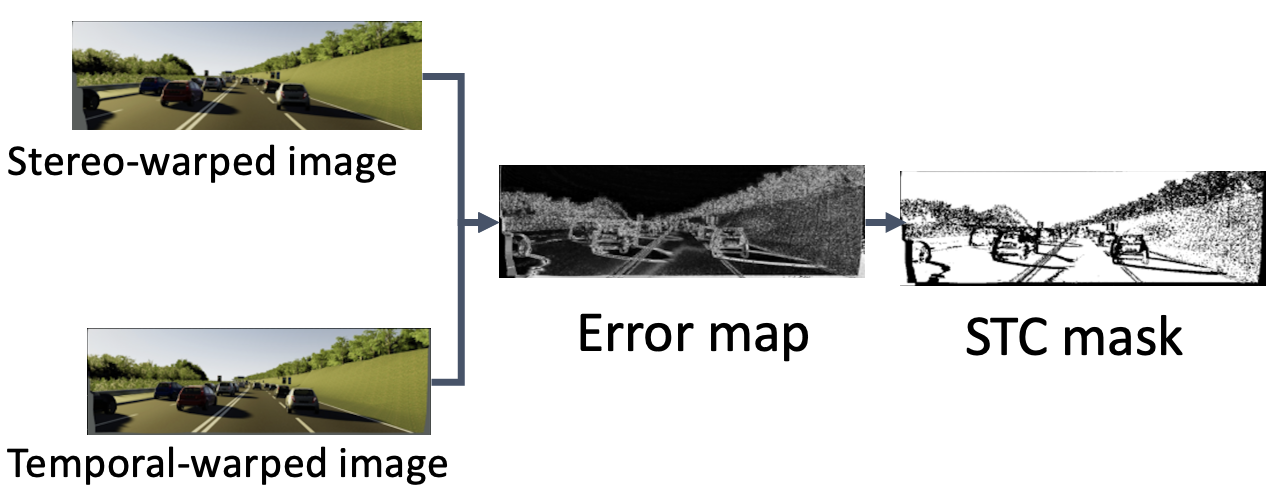
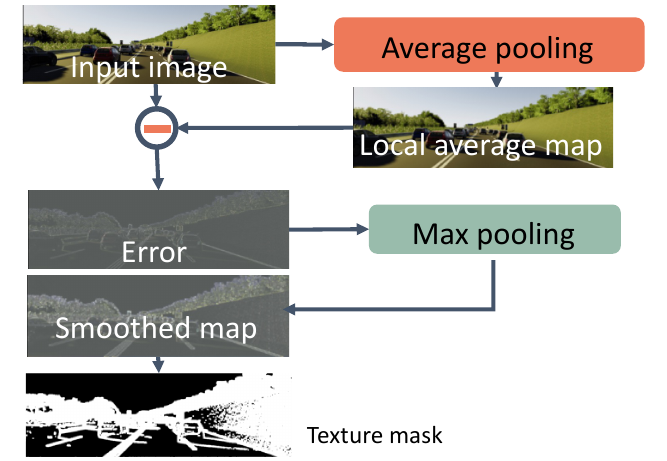
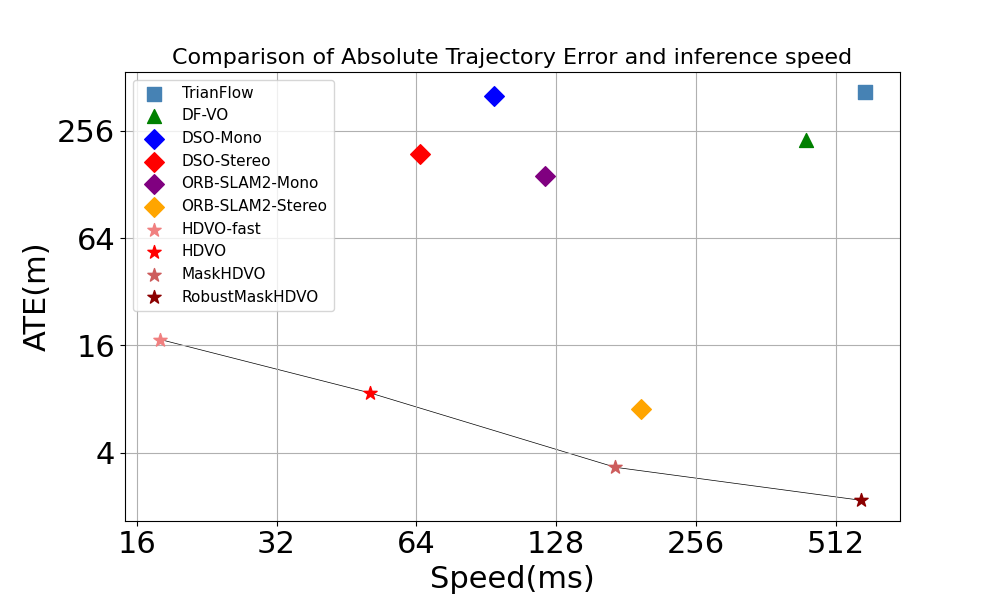
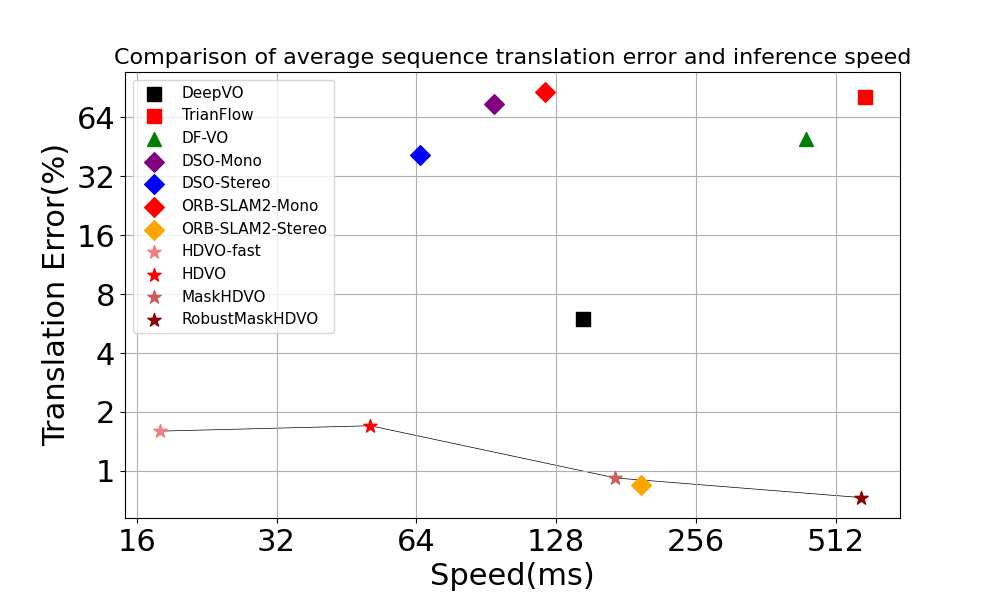
For this loss, occlusion and low texture affect the optimization convergence. This paper investigates a binary mask based on stereo-temporal consistency to address the occlusion problem, along with another binary mask based on local patch consistency to solve the low-texture problem. Finally, it is shown that HDVO achieves a significant advantage in terms of both inference speed and odometry error on public benchmarks.
Contributions
- Unified model-based and data-based odometry. A deep stereo depth network and a classical dense direct visual odometry module are trained end-to-end through a single photometric loss, without any depth ground truth.
- Metric scale from stereo. Stereo depth removes the scale ambiguity of monocular depth priors, which is what makes the estimated trajectory directly usable across scenarios and sensors without ground-truth rescaling.
- Efficient test-time optimization. Only the pose is optimized at inference, so the method keeps real-time performance while retaining the generalization benefit of on-line refinement.
- Robust loss plus binary masks. A Huber loss replaces the unstable learned per-pixel weights, while the STC occlusion mask and the LAM texture mask filter the extreme outliers that re-weighting alone cannot handle.
Why Mask the Photometric Loss
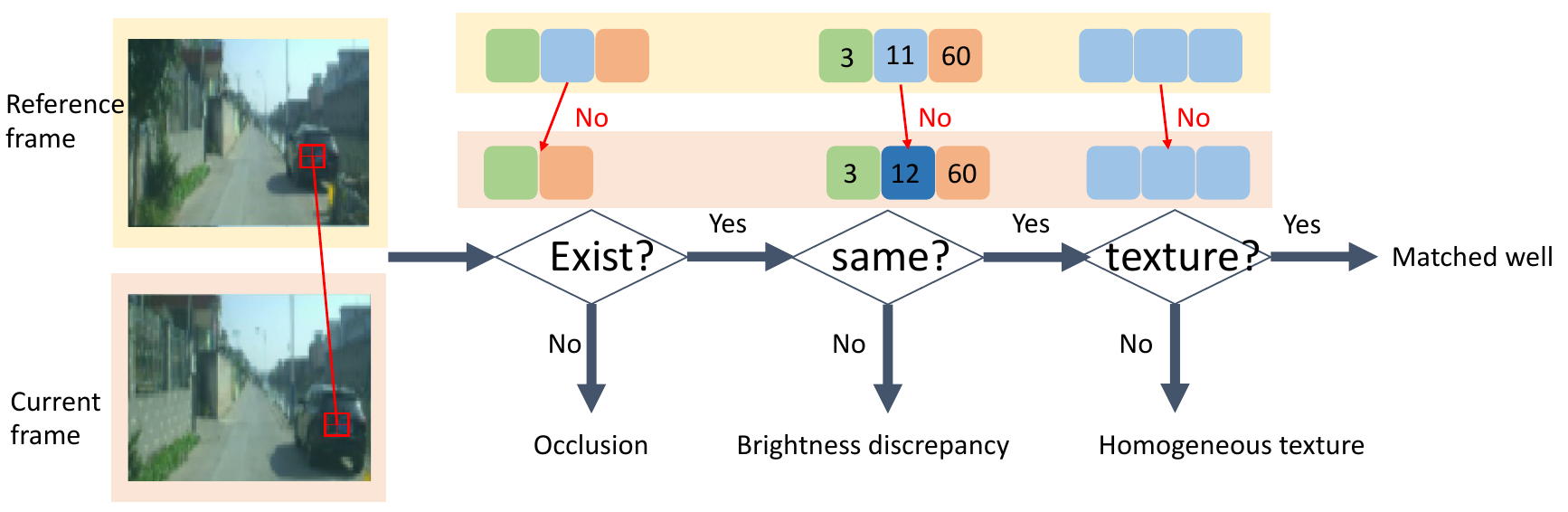
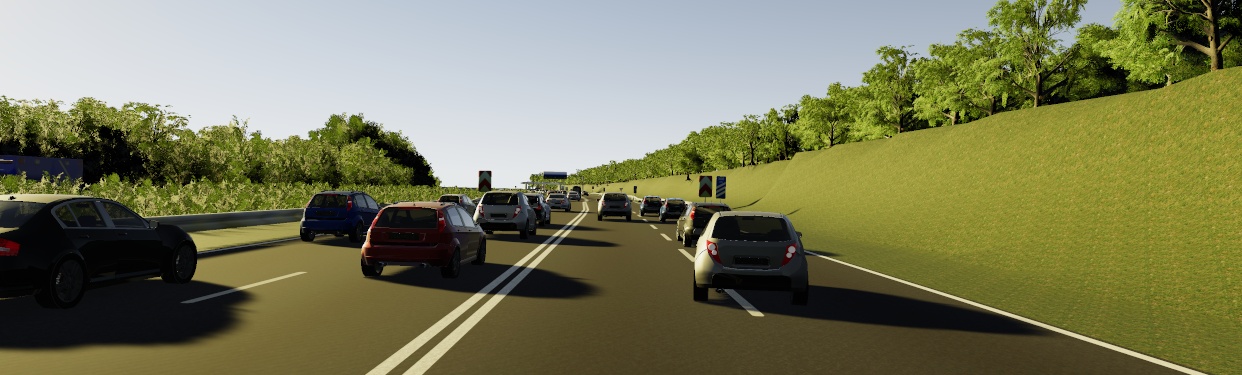
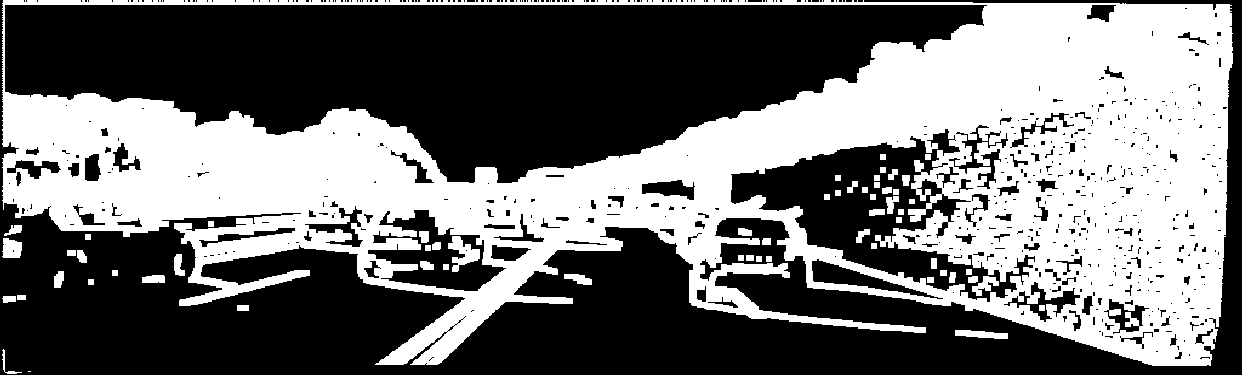
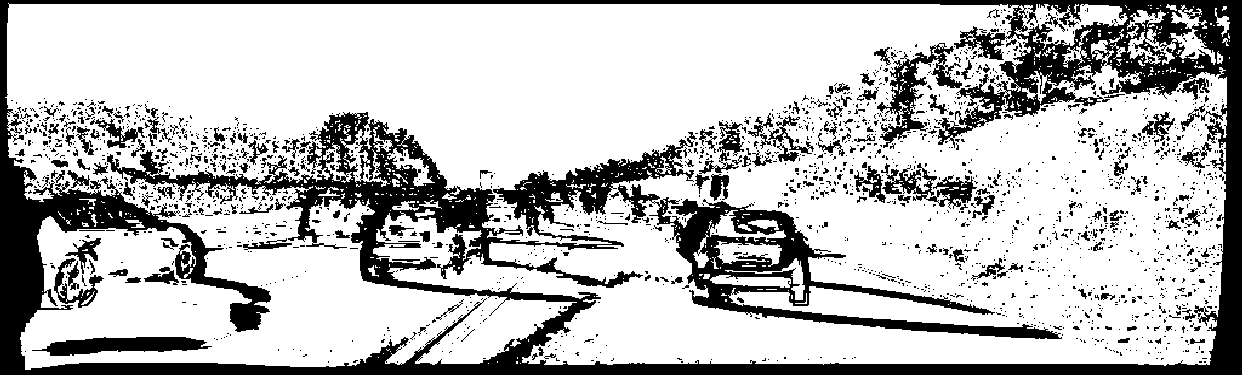
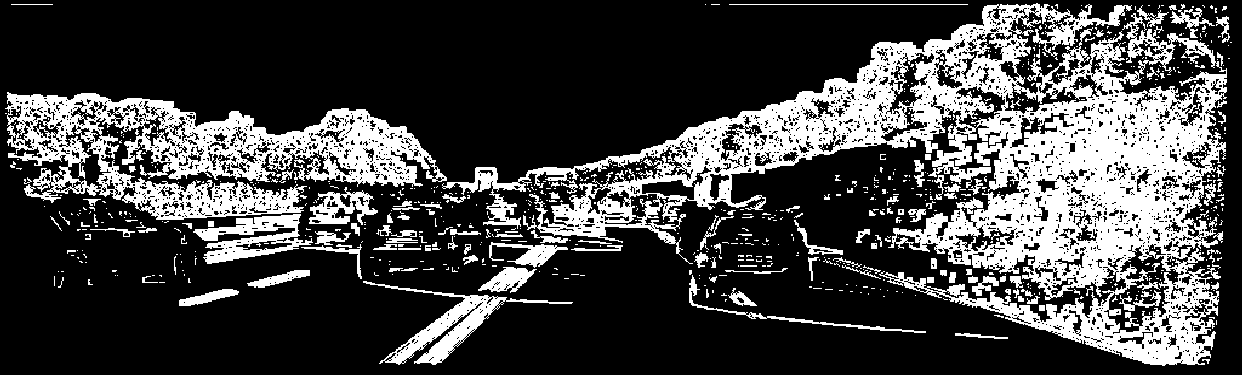
The dense photometric loss is the matching error between the reference and current frames. Three kinds of pixels break this matching: occluded pixels that have no correspondence at all, pixels affected by brightness discrepancy between camera views, and pixels in homogeneous regions that cannot be distinguished from their neighbours. All three act as outliers during optimization.
Results on KITTI Odometry
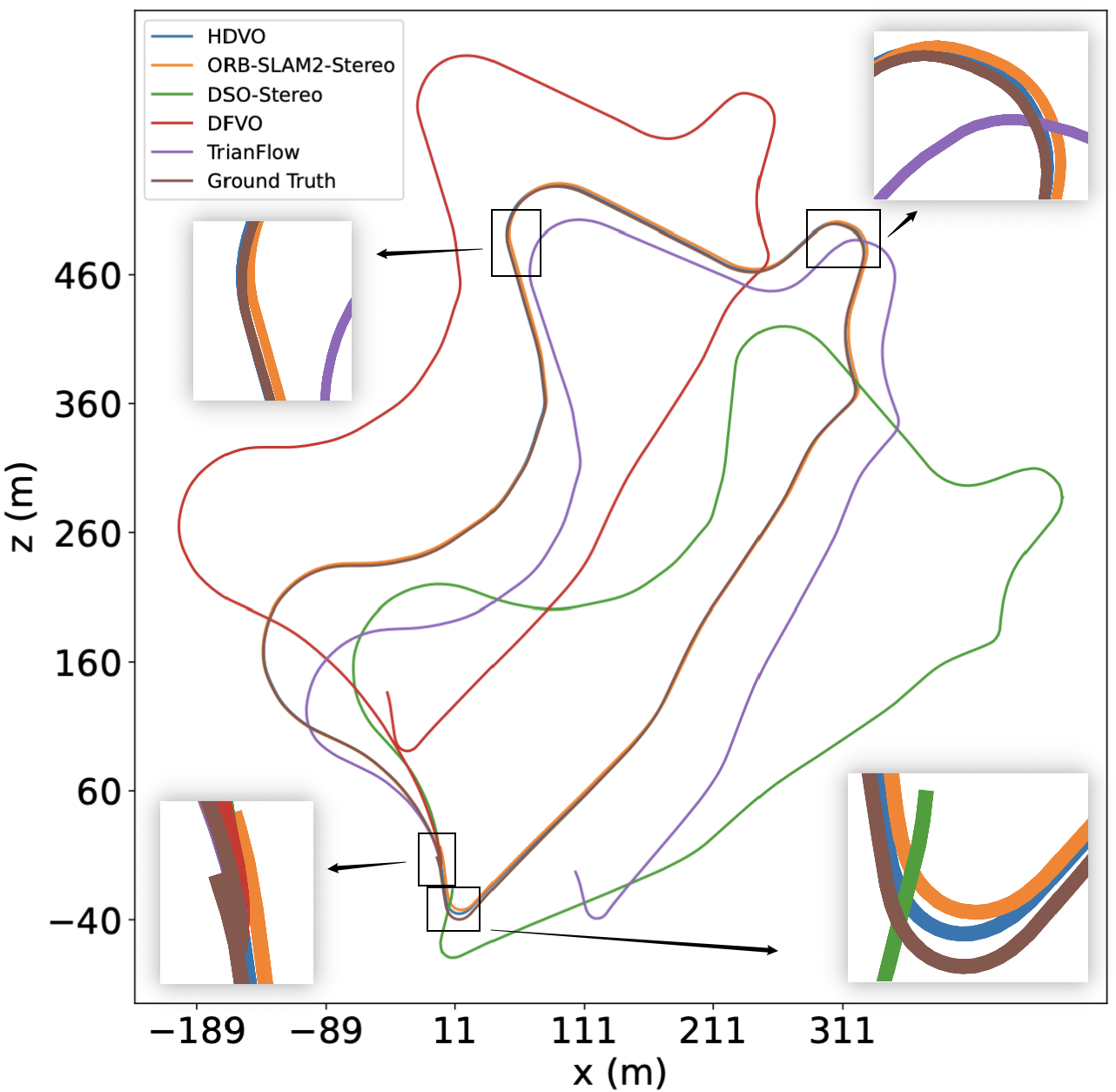
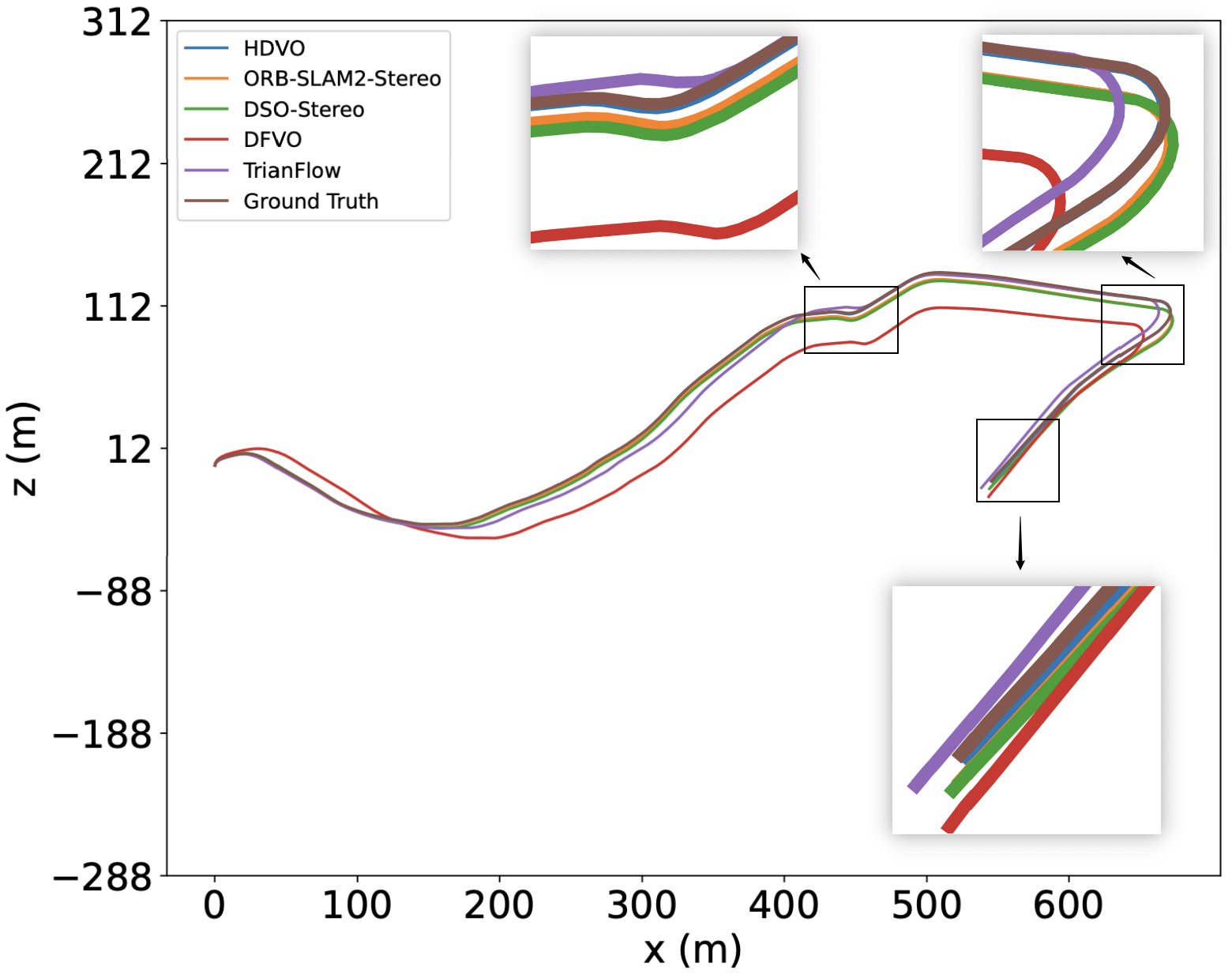
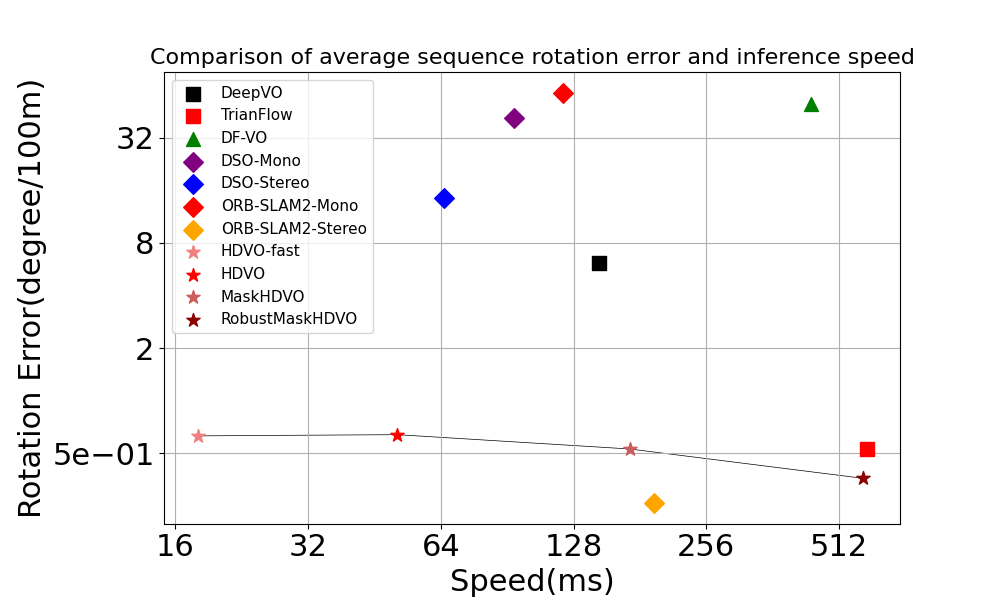
HDVO reaches the lowest translation error among model-based, end-to-end and hybrid methods on KITTI sequences 09 and 10, while producing trajectories at true metric scale. Most competing hybrid and learning-based methods report results rescaled with ground-truth odometry, which makes them unusable as-is for real vehicle localization.
| Method | seq. 09 terr (%) | seq. 09 rerr (°/100m) | seq. 10 terr (%) | seq. 10 rerr (°/100m) |
|---|---|---|---|---|
| ORB-SLAM2 (stereo) | 0.85 | 0.26 | 0.56 | 0.24 |
| DVSO | 0.83 | 0.21 | 0.74 | 0.21 |
| D3VO | 0.78 | – | 0.62 | – |
| DF-VO | 2.07 | 0.23 | 2.06 | 0.36 |
| DINO-VO | 1.64 | 0.93 | 0.96 | 0.71 |
| HDVO (IROS 2022) | 0.87 | 0.28 | 0.87 | 0.46 |
| HDVO (ours) | 0.73 | 0.36 | 0.42 | 0.24 |
Effect of the Masks
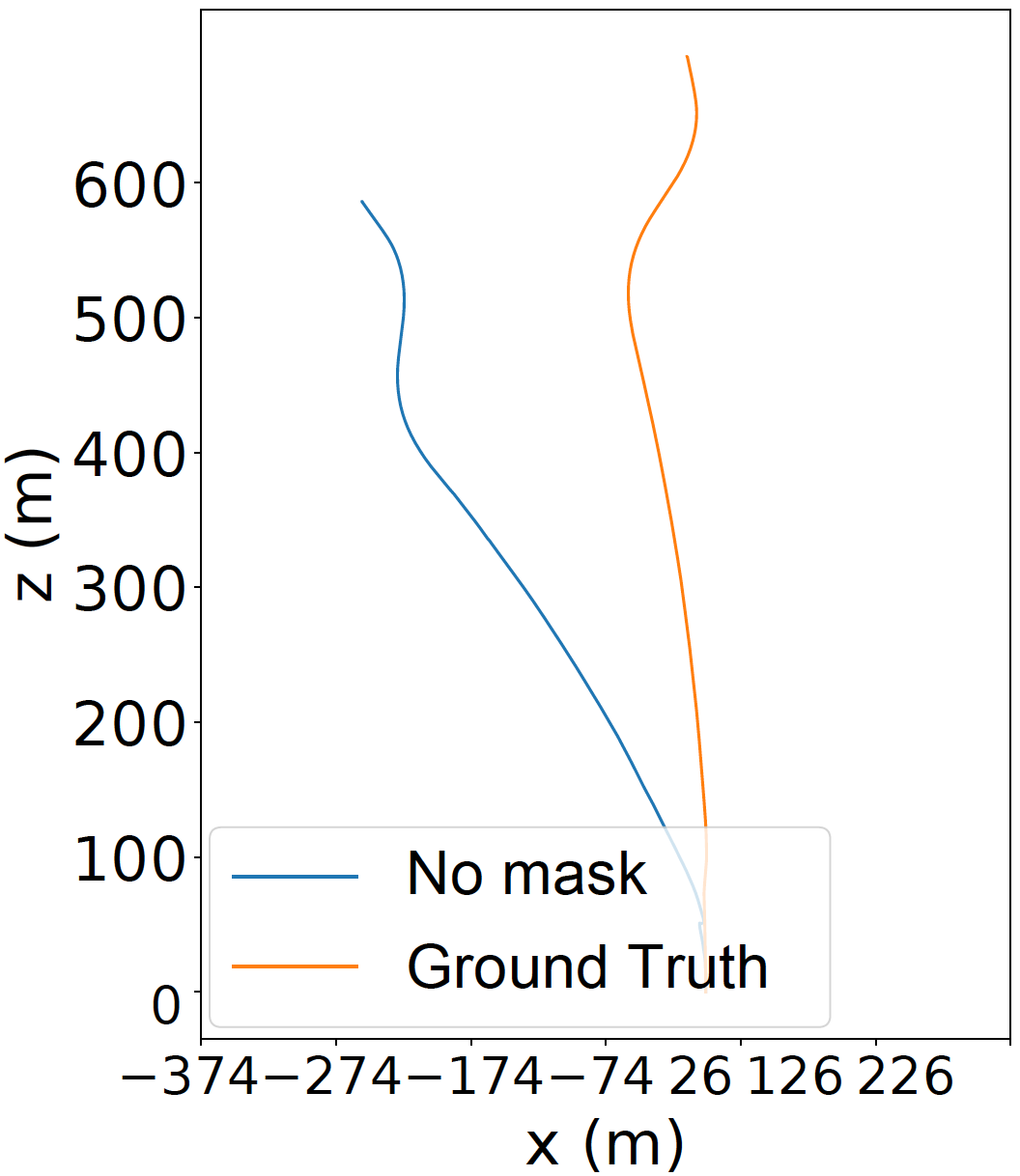
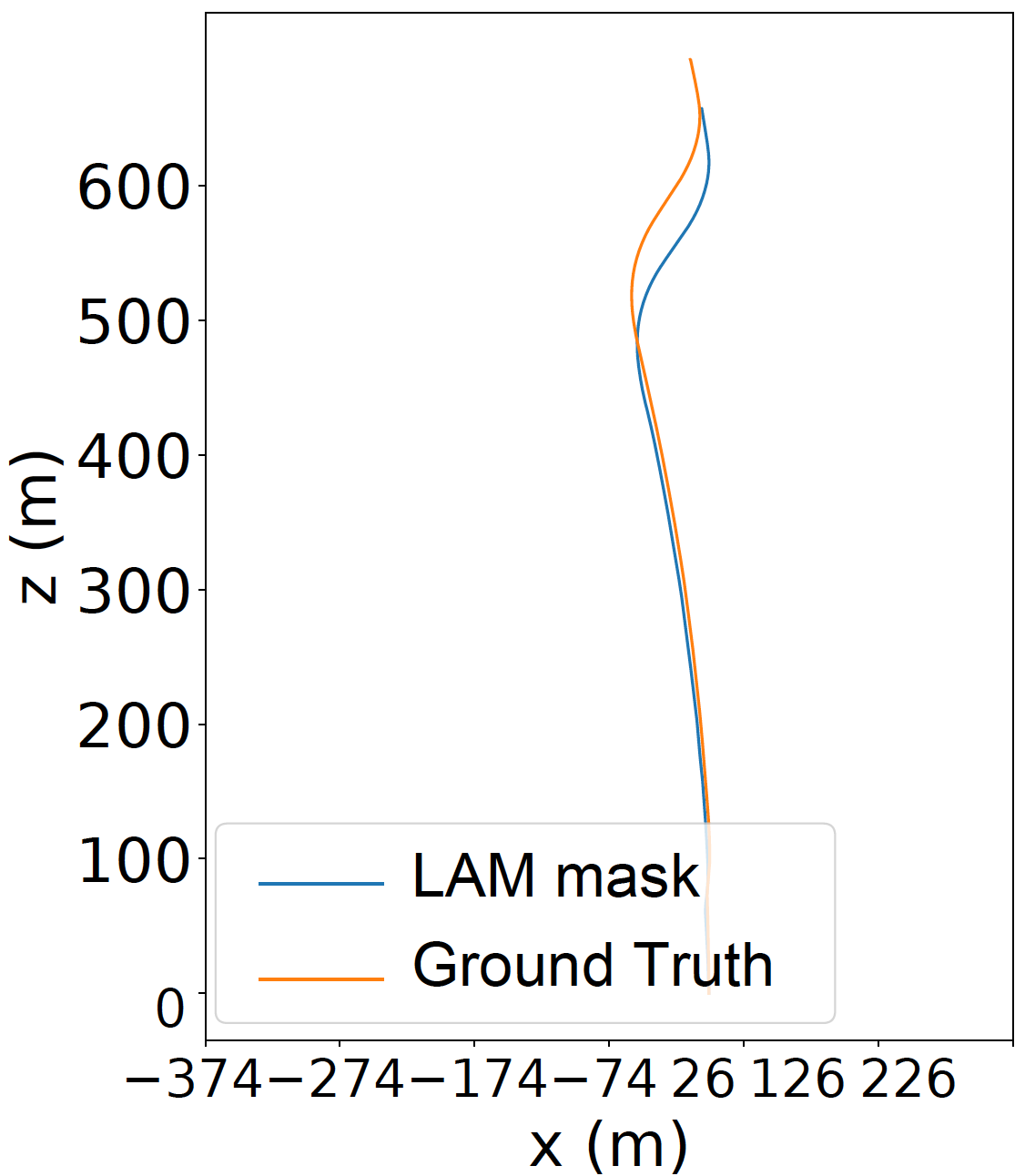
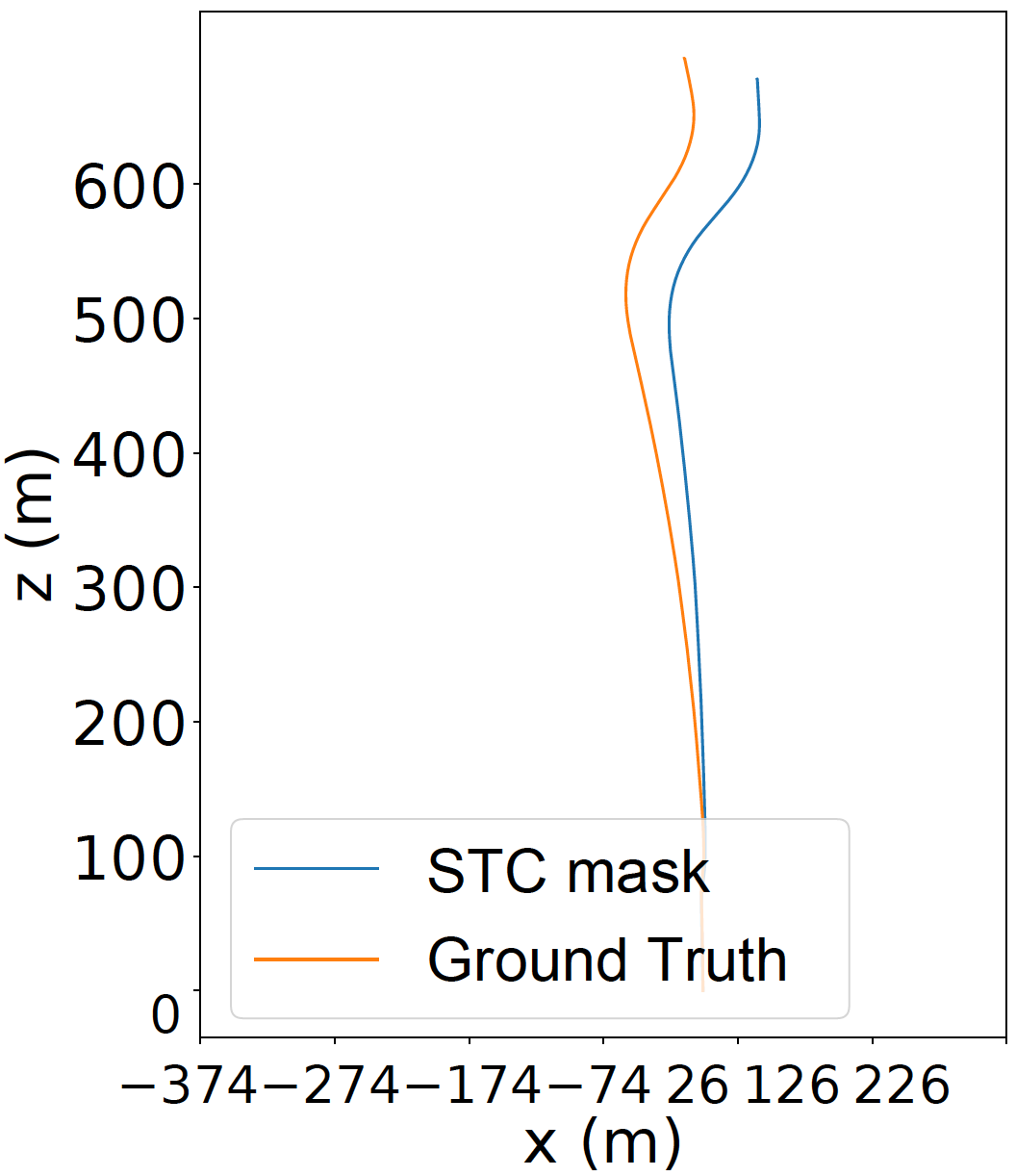
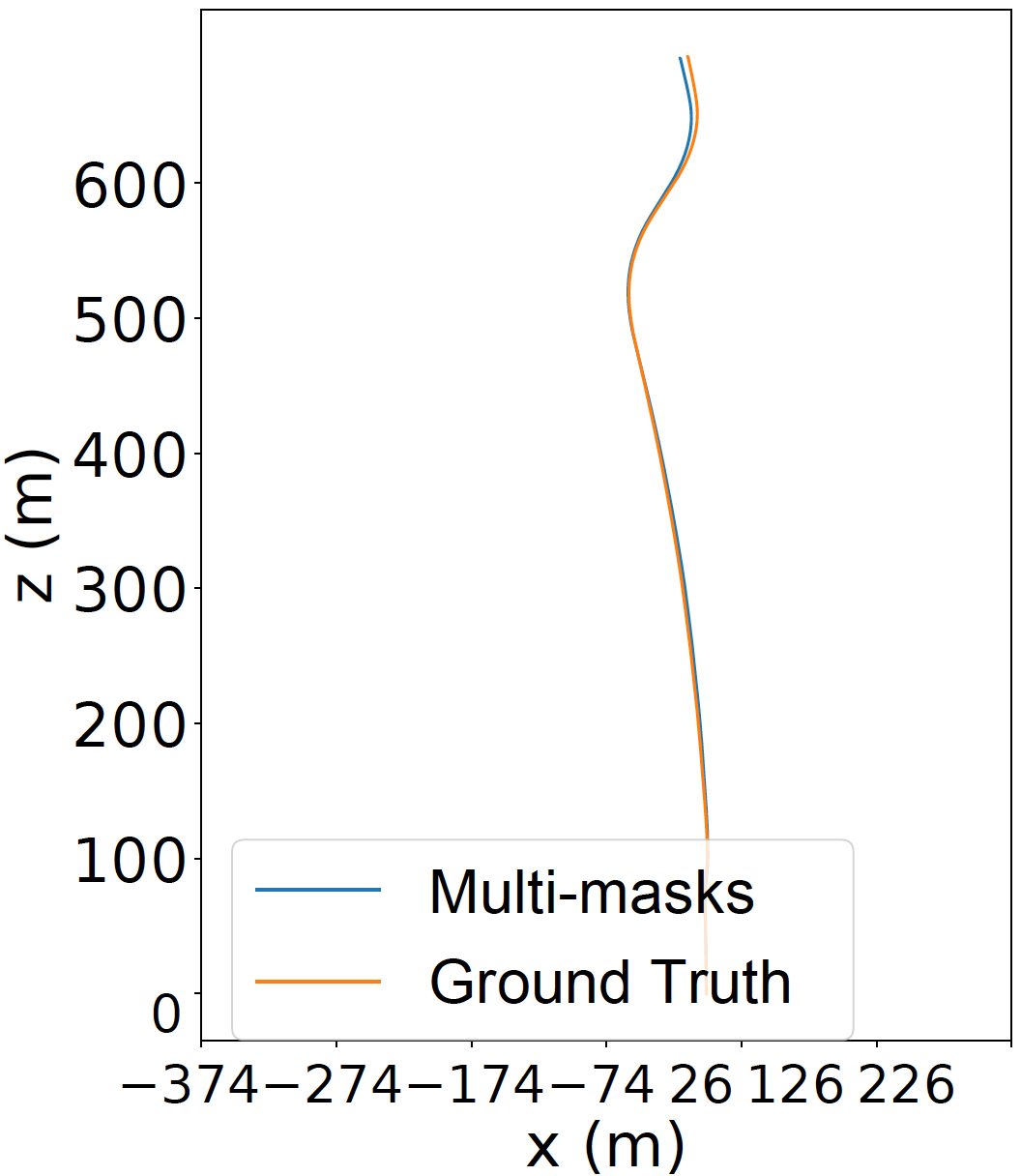
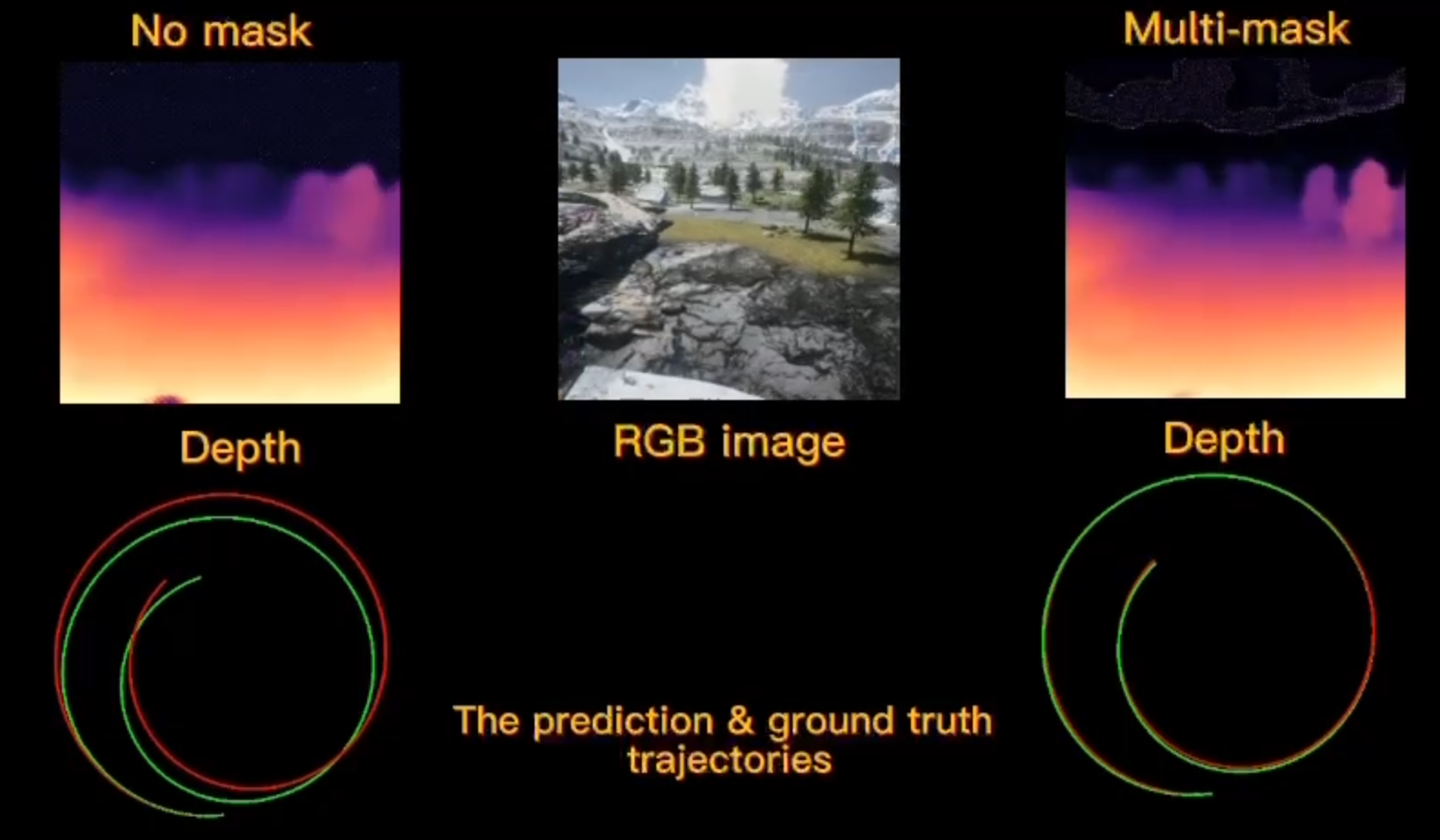
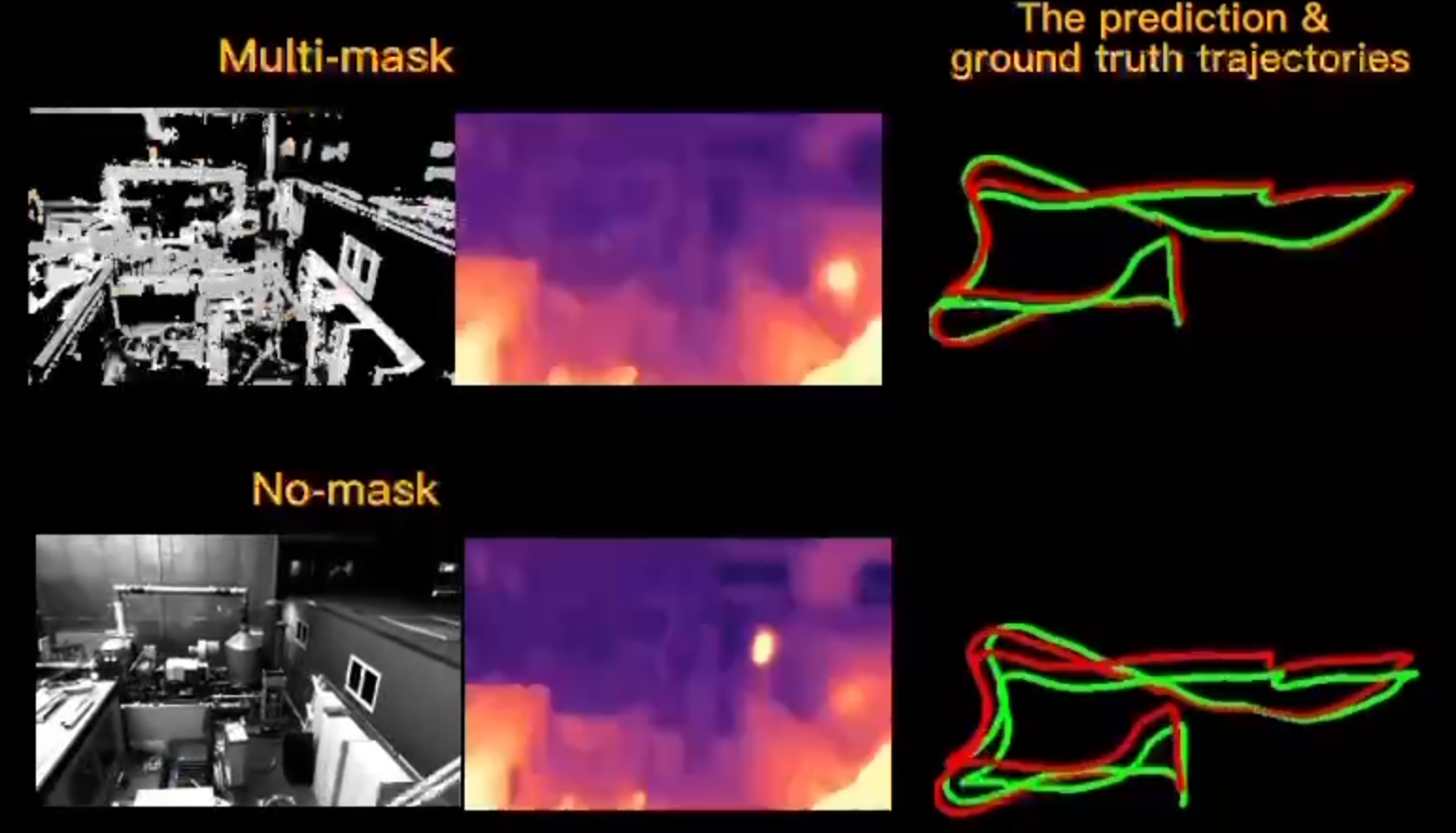
Both masks improve depth and pose accuracy, and their combination is consistently the best. Removing occlusions matters more than removing low-texture regions, but the two are complementary. On Virtual KITTI2 scene 20 the multi-mask reduces the translation error from 13.90% to 0.95%.
| Sequence | Mask | abs rel ↓ | rmse ↓ | terr (%) ↓ | rerr (°/100m) ↓ |
|---|---|---|---|---|---|
| KITTI 09 | none | 0.2827 | 8.414 | 2.77 | 0.68 |
| LAM | 0.2535 | 7.538 | 2.41 | 0.71 | |
| STC | 0.1042 | 3.934 | 2.68 | 0.81 | |
| multi-mask | 0.0665 | 3.305 | 1.54 | 0.45 | |
| Virtual KITTI2 20 | none | 0.7648 | 62.14 | 13.90 | 3.75 |
| LAM | 0.3273 | 63.24 | 5.29 | 0.87 | |
| STC | 0.3298 | 64.75 | 1.68 | 0.76 | |
| multi-mask | 0.1284 | 59.45 | 0.95 | 0.46 |
Inference Cost
Measured with the plain PyTorch implementation using the CoEx stereo backbone. HDVO stays real-time on embedded platforms, with room for further acceleration through ONNX or TensorRT.
| Platform | Time (ms) ↓ | FPS ↑ |
|---|---|---|
| NVIDIA A40 | 21.06 | 47.5 |
| NVIDIA L40 | 26.67 | 37.5 |
| Jetson Orin | 80.89 | 12.4 |
| Jetson Thor | 55.97 | 17.9 |
Generalization
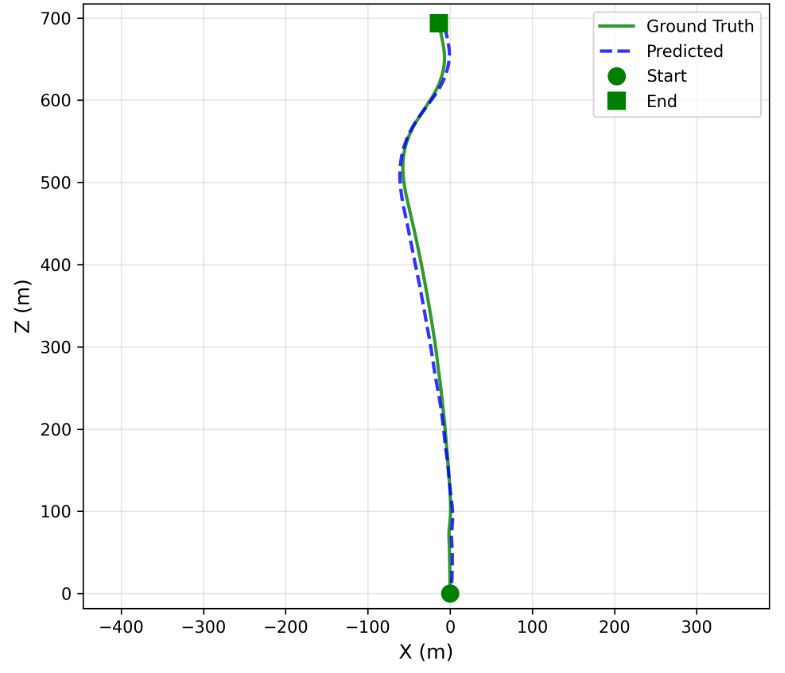
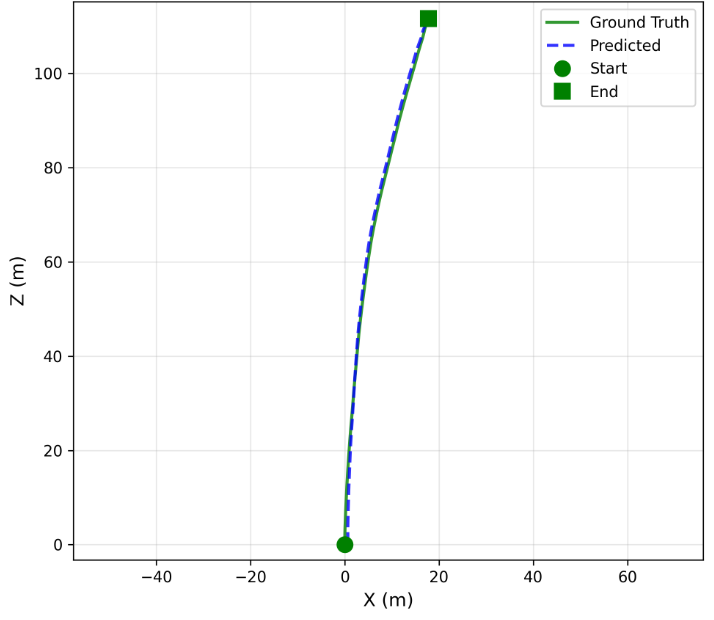
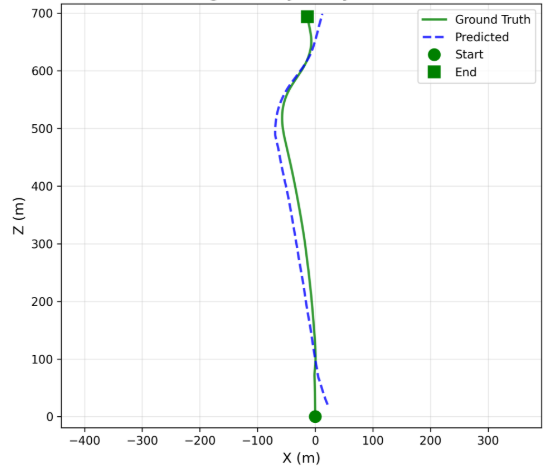
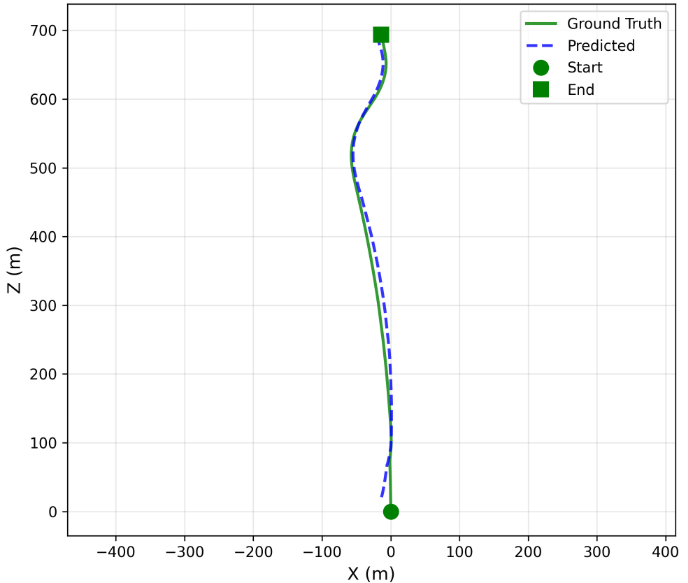
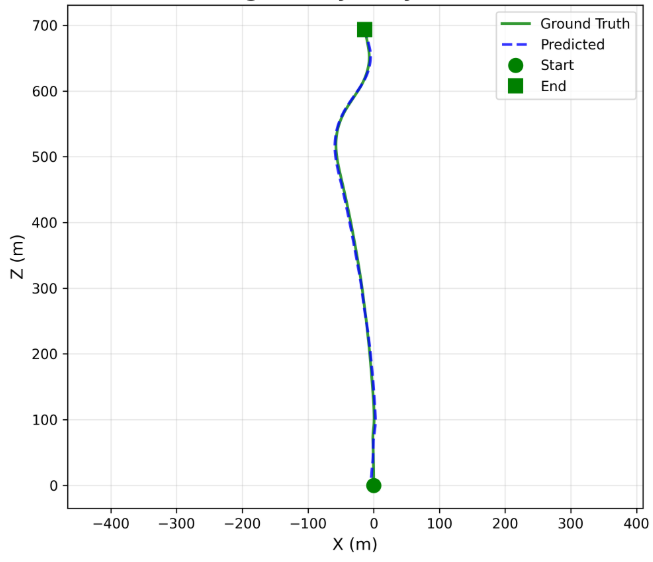
Beyond ground vehicles, HDVO is evaluated on two drone datasets: Mid-Air, where depth reaches beyond 1000 m, and EuRoC MAV, which combines fast motion with a short stereo baseline. The dynamic and weather experiments are zero-shot: the model is trained on KITTI Odometry and evaluated on Virtual KITTI2 without fine-tuning.
| Weather | RPE trans. (m) ↓ | RPE rot. (°) ↓ |
|---|---|---|
| Base | 0.170 | 0.051 |
| Fog | 0.204 | 0.066 |
| Morning | 0.177 | 0.046 |
| Overcast | 0.183 | 0.044 |
| Rain | 0.191 | 0.048 |
| Sunset | 0.173 | 0.041 |
Earlier Conference Versions
This journal article extends two conference papers: the IROS 2022 paper that introduced stereo depth to fix the scale problem of the depth prior, and the ITSC 2023 paper that proposed the rule-based mask generation module.
BibTeX
BibTeX
@article{HDVO-TIV-2026,
  title     = {HDVO: Hybrid Dense Direct Visual Odometry},
  author    = {Liu, Ziming and Malis, Ezio and Martinet, Philippe},
  journal   = {IEEE Transactions on Intelligent Vehicles},
  volume    = {11},
  pages     = {930--945},
  year      = {2026},
  publisher = {IEEE},
  doi       = {10.1109/TIV.2026.3708447}
}
Acknowledgements
This project was funded by 3IA Côte d'Azur, Université Côte d'Azur (Nice, France), and was carried out at Inria.